

Disclaimer: The information provided here is for general education only and is not a substitute for professional medical advice, diagnosis, treatment, or a full assessment of a medical concern or emergency. For a suspected medical emergency, contact 911 immediately or proceed to the closest emergency room for care. Do not rely on this content to diagnose a condition or to decide whether to delay medical attention.
Quick Summary
- Always assign a distraction-free adult water watcher when children or inexperienced swimmers are in or near a pool.
- Use multiple layers of protection, including four-sided fencing, secure gates, swimming skills, and properly fitted life jackets when appropriate.
- Never rely on water wings, inflatable toys, swimming ability, or a lifeguard as a substitute for close adult supervision.
- Keep rescue equipment and a charged phone nearby, and make sure adults know the pool’s exact address in an emergency.
- Learn CPR and establish an emergency plan before anyone enters the water.
- Call 911 immediately for an active drowning emergency, unresponsiveness, abnormal breathing, severe breathing difficulty, seizures, or any situation requiring CPR.
Swimming is a popular way to stay active and cool off during a hot Central Texas summer. However, a safe day at the pool requires more than sunscreen, swimming lessons, and inflatable toys.
Drowning can happen quickly and quietly. It is also the leading cause of death for children ages 1–4 in the United States. The safest approach is to use several layers of protection at the same time, including active supervision, secure barriers, swimming skills, and emergency preparation.
Use these 10 pool safety rules at backyard pools, apartment complexes, hotels, and community recreation facilities.
Active water emergency? Call 911 immediately. If someone is unresponsive, is not breathing normally, is only gasping, or needs rescue breathing or CPR, do not attempt to drive the person to an emergency room. Call 911 and begin care according to your training.
Assign a Designated Water Watcher
Choose one capable adult whose only responsibility is watching the water. The designated water watcher should not scroll on a phone, read, prepare food, drink alcohol, or become absorbed in conversation.
When the water watcher needs a break, supervision must be clearly handed to another adult. Never assume that everyone is watching. When everyone assumes someone else is watching, supervision can easily be missed. Pool Safely recommends assigning an adult water watcher who remains free from phones and other distractions.
Keep Young and Inexperienced Swimmers Within Reach
Toddlers, young children, and weak swimmers need close, continuous supervision. Stay near enough to respond immediately rather than watching from inside the house, across the yard, or from a patio table.
A lifeguard is an important safety resource, but the presence of a lifeguard does not replace a parent or caregiver’s attention. Children should also never be placed under the supervision of another child.
Install a Four-Sided Pool Fence
A backyard pool should be completely separated from the house and yard by a four-sided fence. CDC guidance recommends a fence at least four feet high with a self-closing, self-latching gate.
Keep chairs, tables, play equipment, and other climbable objects away from the barrier. Check applicable local building and pool-barrier requirements before installing or modifying a pool fence.
Prevent Unsupervised Pool Access
Close and latch the gate every time, even when you expect to return shortly. Door alarms, gate alarms, and compliant pool covers can add protection, but they are not substitutes for fencing or active supervision.
Remove toys from the water after swimming so children are not tempted to reach for them. For above-ground pools, remove or secure access ladders when the pool is not being used.
Teach Swimming and Water-Safety Skills
Age-appropriate swimming lessons can help children learn to enter the water safely, return to the surface, float, turn around, reach an exit, and get out.
However, no child is “drown-proof.” Swimming ability should never replace adult supervision, pool barriers, or life jackets. Adults who are not confident swimmers can also benefit from swimming lessons and water-safety training. Formal lessons can reduce drowning risk, but they are only one part of a complete prevention plan.
Use Properly Fitted Life Jackets
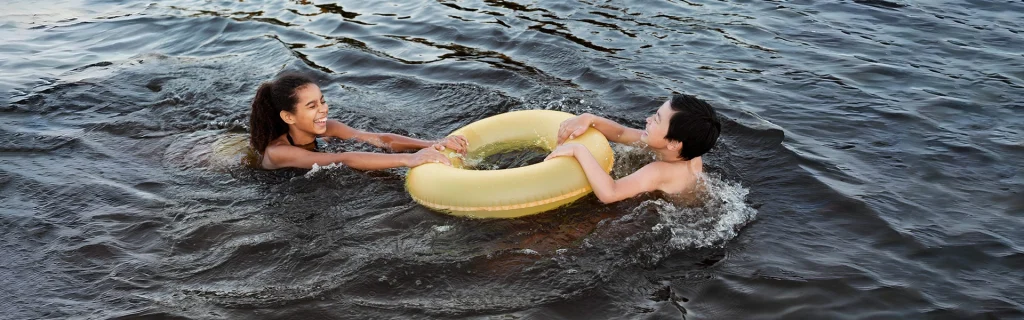
Children and weaker swimmers may need a properly fitted life jacket. Air-filled toys, water wings, noodles, and inflatable rings are recreational products—not lifesaving devices. They can slip off, deflate, or move out of reach.
A life jacket also does not replace close supervision. It is an additional layer of protection. CDC advises against relying on air-filled or foam toys as safety devices.
Enforce Clear Pool Rules
Set expectations before anyone enters the water. Common family pool rules should include:
- Never swim alone.
- Do not run on the pool deck.
- Never push or hold someone underwater.
- Do not dive unless the area is clearly designated for diving.
- Stop swimming during thunderstorms.
- Follow lifeguard instructions.
- Do not supervise or swim while impaired by alcohol or drugs.
The rules should apply to adults as well as children. Adults model the behavior younger swimmers are expected to follow.
Stay Away From Drains and Suction Outlets
Children should never play near pool or spa drains. Hair, jewelry, bathing suits, and body parts can become trapped by powerful suction when drain covers are missing, damaged, or do not meet safety standards.
Do not use a pool or spa with a loose, broken, or missing drain cover. Pool owners should arrange regular inspections and confirm that drain covers comply with federal safety requirements.
Keep Rescue Equipment and a Phone Nearby
Keep a charged phone, life ring, and reaching pole in a visible, accessible location. Display the pool’s exact address so anyone can quickly give it to a 911 dispatcher.
During a rescue, remember: reach or throw, don’t go. An untrained person who enters the water may also become a victim. Alert a lifeguard when one is present, call 911, and use a reaching or flotation device when it is safe to do so.
Learn CPR and Make an Emergency Plan
Anyone who supervises children around a pool should consider CPR training and periodically renew their skills. Decide in advance who will:
- Call 911
- Begin CPR according to their training
- Retrieve an AED or rescue device
- Direct emergency responders to the pool
- Supervise the other children
If a child is missing near a home with a pool or spa, check the water first. Pool Safely also recommends keeping a phone nearby and ensuring adults know how to perform CPR.
When Emergency Care Is Needed After a Pool Incident
Drowning is respiratory impairment caused by submersion or immersion in water. It can be fatal or nonfatal, and a person who survives may still experience serious complications.
Call 911 immediately if the person:
- Is unresponsive
- Is not breathing normally or is only gasping
- Has severe breathing difficulty
- Has blue or gray lips or skin
- Experiences a seizure
- Requires rescue breathing or CPR
Someone who coughs or has trouble breathing after a submersion incident should receive prompt medical attention.
For urgent symptoms after a non-life-threatening water incident, Express ER Temple provides emergency care for adults and children 24 hours a day, seven days a week. Board-certified emergency physicians provide care at the facility, with on-site laboratory testing and radiology services available.
Express ER Temple is located at 1551 W. Central Ave., Temple, TX, 76504. Call 254-435-5900 for facility information. Life-threatening emergencies should always go through 911.
Pool safety starts with preparation. Assign a water watcher, secure every access point, keep young swimmers close, and make sure the entire family knows the emergency plan.
Make Pool Safety a Family Priority
Keeping the pool area safe requires planning, close supervision, and several practical safeguards. Secure barriers, swimming skills, appropriate life jackets, clear safety rules, and CPR knowledge can work together to lower the risk of drowning and other water emergencies.
Before anyone gets in the water, make sure safety equipment is accessible, and every adult understands the emergency plan. If a serious pool incident occurs, call 911 immediately and provide care according to your training.
By making these precautions part of every swim day, families can spend more time enjoying the water while creating a safer environment for children and adults alike.
Frequently Asked Questions About Pool Safety
The most important rule is close, constant, and distraction-free adult supervision. A designated water watcher should focus only on the swimmers and clearly transfer responsibility before leaving. Supervision is most effective when combined with pool fencing, swimming skills, life jackets, and emergency preparation.
A designated water watcher is a responsible adult assigned to supervise everyone in or near the pool. The person should not use a phone, read, drink alcohol, prepare food, or perform another task. Adults can rotate the responsibility, but each handoff should be clearly communicated.
Yes. A person who is drowning may be unable to call for help because they are struggling to breathe. That is why adults should watch swimmers continuously rather than relying on noise, splashing, or a request for assistance to signal an emergency.
The CDC advises using a four-sided barrier that fully separates the pool area from the home and surrounding yard. It should be at least four feet high and have a self-closing, self-latching gate. Homeowners should also follow applicable local building and pool-barrier codes.
Water wings, noodles, inflatable rings, and other pool toys are not safety devices. They may deflate, slip off, or move away from a child. Weaker swimmers may need a properly fitted life jacket, but even a life jacket does not replace close adult supervision.
No. Swimming lessons can improve water competency and may reduce risk, but they cannot make a child drown-proof. Children who know how to swim still need active supervision, secure barriers, clear pool rules, and appropriate flotation protection.
Call 911 for unresponsiveness, severe breathing difficulty, abnormal breathing, gasping, seizures, blue or gray coloring, or any need for CPR. A person who coughs or has difficulty breathing after a submersion incident should receive prompt medical attention, even if they initially appear to improve.